Showing posts with label Japan. Show all posts

Friday, December 8, 2023

oni

 An oni (おに) (/ni/ OH-nee) is a kind of yōkai, demon, orc, ogre, or troll in Japanese folklore. They are believed to live in caves or deep in the mountains.
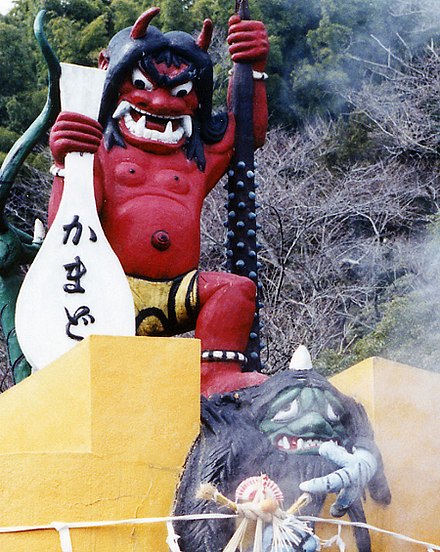

This oni (ogre) tramples a hapless villain in Beppu, Oita, Oita Prefecture, a famous onsen hot springs resort on the island of Kyushu in Japan.

👹

Friday, September 8, 2023

Mono no aware

 Mono no aware (物の哀れ), lit.'the pathos of things', and also translated as 'an empathy toward things', or 'a sensitivity to ephemera', is a Japanese idiom for the awareness of impermanence (無常, mujō), or transience of things, and both a transient gentle sadness (or wistfulness) at their passing as well as a longer, deeper gentle sadness about this state being the reality of life.


Thursday, September 7, 2023

wabi-sabi

 In traditional Japanese aesthetics, wabi-sabi (侘寂) is a world view centered on the acceptance of transience and imperfection. The aesthetic is sometimes described as one of appreciating beauty that is "imperfect, impermanent, and incomplete" in nature. It is prevalent in many forms of Japanese art.

Thursday, April 13, 2023

Magatama

 Magatama (勾玉, less frequently 曲玉) are curved, comma-shaped beads that appeared in prehistoric Japan from the Final Jōmon period through the Kofun period, approximately 1000 BCE to the 6th century CE.


Wednesday, February 22, 2023

Dogeza


Dogeza (土下座) is an element of traditional Japanese etiquette which involves kneeling directly on the ground and bowing to prostrate oneself while touching one's head to the floor. It is used to show deference to a person of higher status, as a deep apology or to express the desire for a favor from said person.

The term is used in Japanese politics such as "dogeza-gaikō" (土下座外交) which is translated to "kowtow diplomacy" or "kowtow foreign policy".


Friday, February 10, 2023

Menma

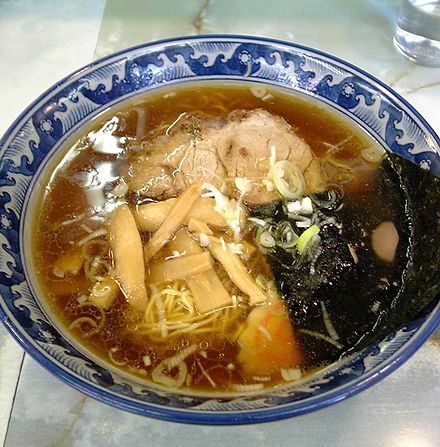
 Menma (メンマ, 麺麻, 麺碼) is a Japanese condiment made from lacto-fermented bamboo shoots. The bamboo shoots are dried in the sun or through other means before the process of fermentation. Menma is a common topping for noodle soups, notably ramen.


Friday, February 3, 2023

Nomunication


Nomunication

A portmanteau of "Communication" and the Japanese word "Nomu," to drink, the term refers to the ability of alcohol to transcend cultural barriers in facilitating discourse and making babies.

Thursday, January 19, 2023

ensō

 In Zen, an ensō (, "circular form") is a circle that is hand-drawn in one or two uninhibited brushstrokes to express a moment when the mind is free to let the body create. 


Friday, October 21, 2022

kaketsugi


Tucked away in a Minokamo City workshop located in Gifu prefecture Japan, a father and daughter team repair damaged clothing using "kaketsugi", an "invisible mending" technique that uses a needle, thread and craftmanship so fine that virtually no trace of repair is visible.

Monday, June 27, 2022

Tsundoku

 Tsundoku (Japanese: 積ん読) is acquiring reading materials but letting them pile up in one's home without reading them. It is also used to refer to books ready for reading later when they are on a bookshelf.


Friday, June 3, 2022

andon

 In manufacturing, andon (Japanese: アンドン or あんどん or 行灯) is a system which notifies managerial, maintenance, and other workers of a quality or process problem. 


Wednesday, January 13, 2021

Sangaku

 Sangaku or San Gaku (算額; lit. translation: calculation tablet) are Japanese geometrical problems or theorems on wooden tablets which were placed as offerings at Shinto shrines or Buddhist temples during the Edo period by members of all social classes. 


Monday, January 11, 2021

Amazake

 Amazake (甘酒, [amazake]) is a traditional sweet, low-alcohol Japanese drink made from fermented rice. Amazake dates from the Kofun period, and it is mentioned in the Nihon Shoki. It is part of the family of traditional Japanese foods made using the koji mold Aspergillus oryzae (, kōji), which also includes miso, soy sauce, and sake.


Sunday, October 27, 2019

hanami

Hanami (花見, "flower viewing") is the Japanese traditional custom of enjoying the transient beauty of flowers.

Wednesday, July 29, 2015

tsundoku

積ん読 (hiragana つんどく, romaji tsundoku)

  1. (informal) the act of leaving a book unread after buying it, typically piled up together with such other unread books

Saturday, January 3, 2015

Kancho

Kancho (カンチョー kanchō) is a prank often played in Japan; it is performed by clasping the hands together so the index fingers are pointing out and attempting to insert them sharply into someone's anal region when the victim is not looking. It is similar to the wedgie or a goosing, although, as compared to kancho, the former mentioned acts do not involve physical contact which is quite as intimate or direct. A Kancho is often executed simultaneously as the offending party loudly emphasizes the second syllable of "Kan-CHO!".

Thursday, December 4, 2014

Netsuke

Netsuke (Japanese:根付) are miniature sculptures that were invented in 17th-century Japan to serve a practical function (the two Japanese characters ne+tsuke mean "root" and "to attach"). Traditional Japanese garments—robes called kosode and kimono—had no pockets; however, men who wore them needed a place to store their personal belongings, such as pipes, tobacco, money, seals, or medicines.

Wednesday, July 16, 2014

Fan service

Fan service (ファンサービス fan sābisu), fanservice, or service cut (サービスカット sābisu katto), is a term originating from anime and manga fandom for material in a series which is intentionally added to please the audience. It is about "servicing" the fan - giving the fans "exactly what they want". Fan service usually refers to "gratuitous titillation", but can also refer to intertextual references to other series.

Thursday, June 5, 2014

hibakusha

The surviving victims of the atomic bombings of Hiroshima and Nagasaki are called hibakusha (被爆者), a Japanese word that literally translates to "explosion-affected people". Many victims were Japanese who still live in Japan, but several thousand, Japanese and non-Japanese, live abroad in Korea, the United States, Brazil and elsewhere.

synanthrope

 A synanthrope (from ancient Greek σύν sýn "together, with" and ἄνθρωπος ánthrōpos "man") is an organism that evolve...