Showing posts with label animal. Show all posts

Sunday, April 27, 2025

synanthrope

 A synanthrope (from ancient Greek σύν sýn "together, with" and ἄνθρωπος ánthrōpos "man") is an organism that evolved to live near humans and benefit from human settlements and their environmental modifications (see also anthropophilia for animals who live close to humans as parasites). The term includes many animals and plants regarded as pests or weeds, but does not include domesticated species. Common synanthrope habitats include houses, sheds and barns, non-building structures, gardens, parks, farms, road verges and rubbish dumps. 

 Examples:

  • mice
  • pigeons
  • seagulls
  • monkeys


Saturday, November 18, 2023

spave


spave (third-person singular simple present spaves, present participle spaving, simple past and past participle spaved)

  1. Archaic form of spay (“remove the ovaries of an animal”).

Friday, March 3, 2023

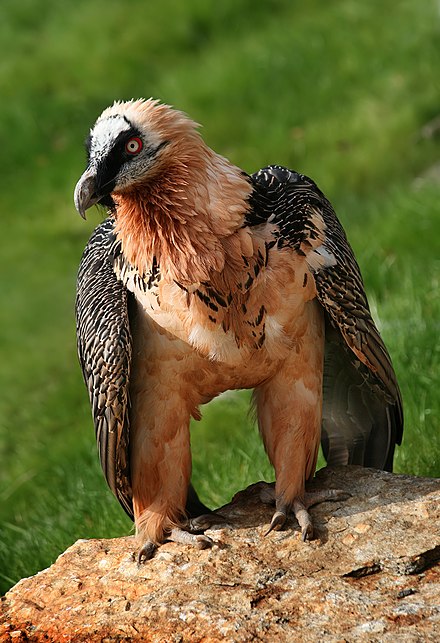
lammergeier

 The bearded vulture (Gypaetus barbatus), also known as the lammergeier and ossifrage, is a very large bird of prey and the only member of the genus Gypaetus. Traditionally considered an Old World vulture, it actually forms a separate minor lineage of Accipitridae together with the Egyptian vulture (Neophron percnopterus), its closest living relative. It is not much more closely related to the Old World vultures proper than to, for example, hawks, and differs from the former by its feathered neck. Although dissimilar, the Egyptian and bearded vulture each have a lozenge-shaped tail—unusual among birds of prey. It is vernacularly known as Homa, a divine bird in Iranian mythology.


Thursday, March 2, 2023

Hacking

 Hacking is a training method that helps young birds of prey reach their hunting potential by giving them exercise and experience. This technique is used to prepare the falcon to become an independent hunter. The sequence of the procedure includes captivity, releasing, flight, and either the falcon will be recaptured for falconry or released into the wild. This has also been adapted to other raptor species to preserve the population. Generally, falconers agree that hacked falcons are better and more preferred in the field. 


Tuesday, January 31, 2023

Thursday, January 26, 2023

monkfish

 Members of the genus Lophius, also sometimes called monkfish, fishing-frogs, frog-fish, and sea-devils, are various species of lophiid anglerfishes found in the Atlantic and Indian Oceans. Lophius is known as the "monk" or "monkfish" to the North Sea and North Atlantic fishermen, a name which also belongs to Squatina squatina, the angelshark, a type of shark. The North European species is Lophius piscatorius, and the Mediterranean species is Lophius budegassa.


Saturday, January 21, 2023

lagomorph

 The lagomorphs are the members of the taxonomic order Lagomorpha, of which there are two living families: the Leporidae (hares and rabbits) and the Ochotonidae (pikas). The name of the order is derived from the Ancient Greek lagos (λαγώς, "hare") + morphē (μορφή, "form"). There are 110 recent species of lagomorph of which 109 are extant, including 34 species of pika, 42 species of rabbit, and 33 species of hare. 


Wednesday, December 14, 2022

Viscacha

 Viscacha or vizcacha are rodents of two genera (Lagidium and Lagostomus) in the family Chinchillidae. They are native to South America and convergently resemble rabbits.


Monday, November 7, 2022

Gytrash


The Gytrash , a legendary black dog known in Northern England, was said to haunt lonely roads awaiting travelers. Appearing in the shape of horses, mules, cranes or dogs, the Gytrash haunt solitary ways and lead people astray, but they can also be benevolent, guiding lost travelers to the right road. They are usually feared.

In some parts of Lincolnshire and Yorkshire, the Gytrash was known as the Shagfoal and took the form of a spectral mule or donkey with eyes that glowed like burning coals. In this form, the beast was believed to be purely malevolent. 


Wednesday, June 15, 2022

passerine

 A passerine (/ˈpæsəraɪn/) is any bird of the order Passeriformes (/ˈpæsərɪfɔːrmiːz/; from Latin passer 'sparrow' and formis '-shaped'), which includes more than half of all bird species.


Tuesday, June 14, 2022

Swanskin

Swanskin

Swanskin fabric was originally a fabric that was literally the skin of the swan with the feathers still attached, however more recently because of the preservation of the swan it has now come to describe a type of brushed cotton flannel fabric.

In the 19th and early 20th centuries, the trumpeter swan was hunted heavily, for game or meat, for the soft swanskins used in powder puffs, and for their quills and feathers. 


Friday, June 10, 2022

dickcissel

 The dickcissel (Spiza americana) is a small seed-eating bird in the family Cardinalidae. It breeds on the prairie grasslands of the Midwestern United States and winters in Central America, northern Colombia, and northern Venezuela. It is the only member of the genus Spiza, though some sources list another supposedly extinct species.


Tuesday, April 19, 2022

Porpoising

 Porpoising

How porpoises leap out of the water, coined by Tadashi Tokieda, from a numberphile video.


Friday, April 15, 2022

chelicerae

 The chelicerae (/kəˈlɪsəriː/) are the mouthparts of the Chelicerata, an arthropod group that includes arachnids, horseshoe crabs, and sea spiders. Commonly referred to as "jaws", chelicerae may be shaped as either articulated fangs, or similarly to pincers. 


Thursday, March 31, 2022

Myrmecology

 Myrmecology (/mɜːrmɪˈkɒlədʒi/; from Greek: μύρμηξ, myrmex, "ant" and λόγος, logos, "study") is a branch of entomology focusing on the scientific study of ants. 


Monday, February 28, 2022

Wednesday, September 22, 2021

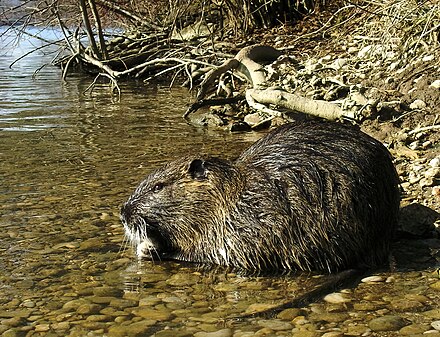
nutria

 The coypu (from Spanish coipú, from Mapudungun koypu; Myocastor coypus), also known as the nutria, is a large, herbivorous, semiaquatic rodent. Classified for a long time as the only member of the family Myocastoridae, Myocastor is now included within Echimyidae, the family of the spiny rats.


Sunday, May 9, 2021

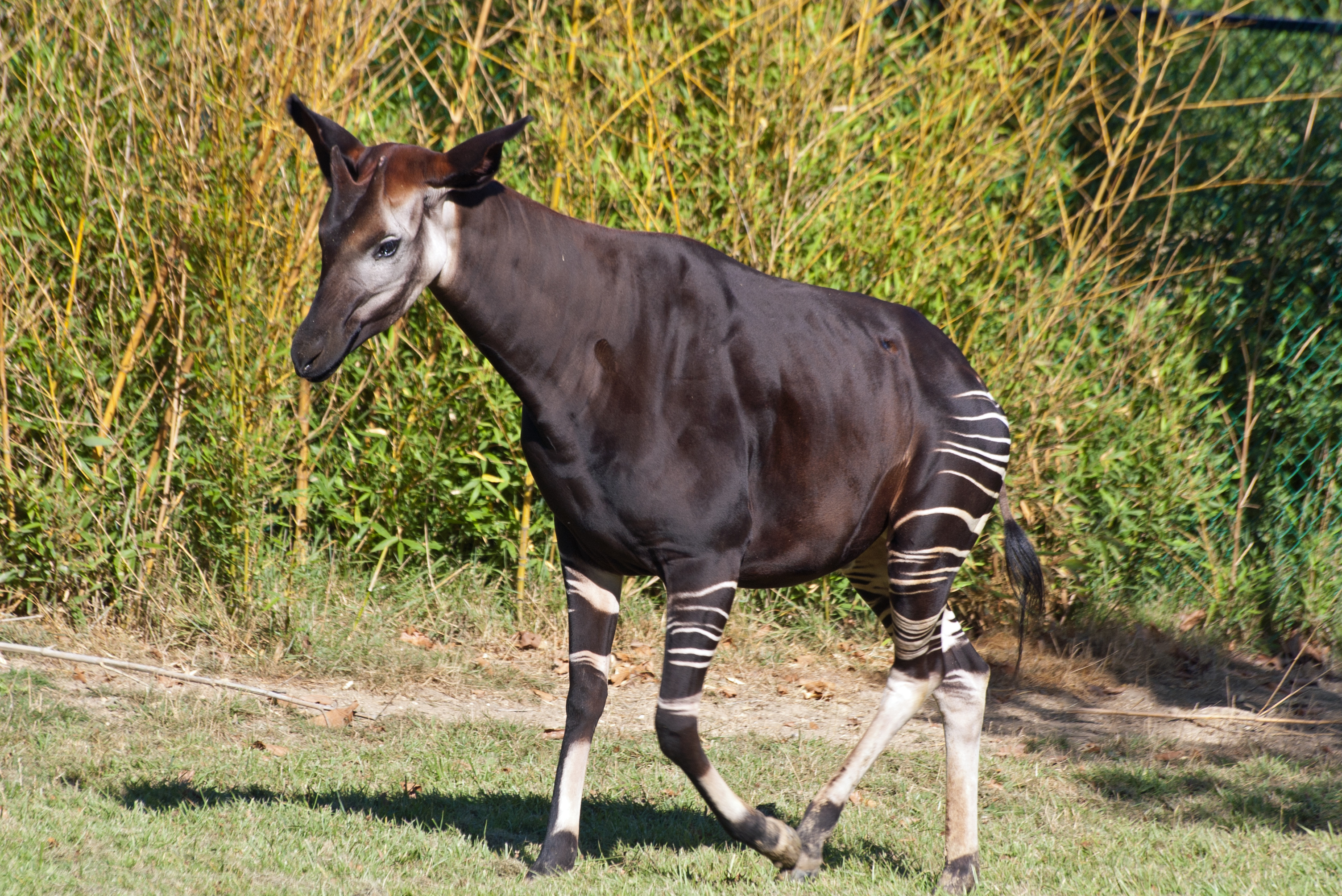
okapi


okapi

Noun

  • similar to the giraffe but smaller with much shorter neck and stripe on the legs

Thursday, April 14, 2016

Turnspit Dog

The Turnspit Dog was a short-legged, long-bodied dog bred to run on a wheel, called a turnspit or dog wheel, to turn meat. The type is now extinct. It is mentioned in Of English Dogs in 1576 under the name "Turnespete". William Bingley's Memoirs of British Quadrupeds (1809) also talks of a dog employed to help chefs and cooks. It is also known as the Kitchen Dog, the Cooking Dog, the Underdog and the Vernepator. In Linnaeus's 18th century classification of dogs it is listed as Canis vertigus. The breed was lost since it was considered to be such a lowly and common dog that no record was effectively kept of it. Some sources consider the Turnspit a kind of Glen of Imaal Terrier, others make it a relative of the Welsh Corgi.

synanthrope

 A synanthrope (from ancient Greek σύν sýn "together, with" and ἄνθρωπος ánthrōpos "man") is an organism that evolve...