Lojban (pronounced [ˈloʒban] ⓘ) is a logical, constructed, human language created by the Logical Language Group which aims to be syntactically unambiguous. It succeeds the Loglan project.
Showing posts with label language. Show all posts
Showing posts with label language. Show all posts
Friday, October 13, 2023

Friday, October 6, 2023
Irish
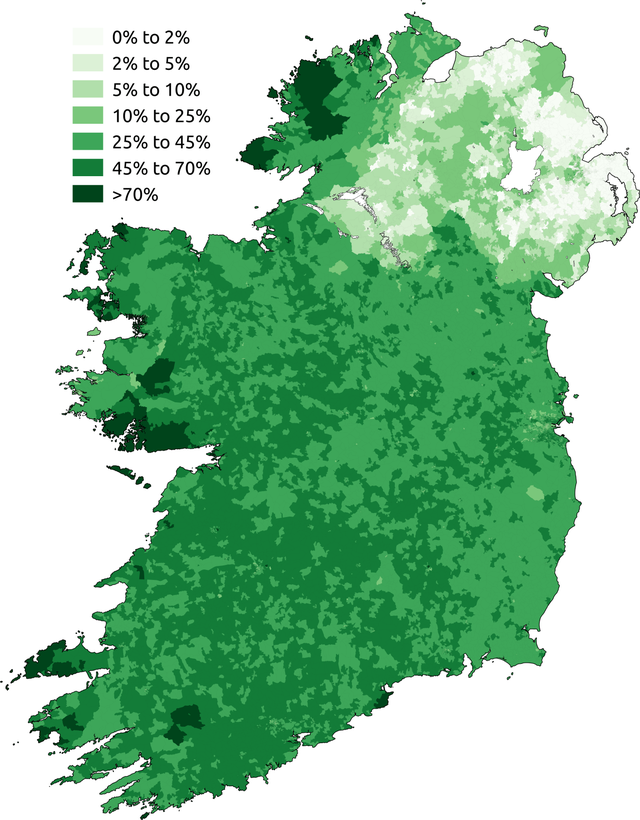
Irish (Standard Irish: Gaeilge), or Gaelic (/ˈɡeɪlɪk/ GAY-lik), also sometimes known outside Ireland as Irish Gaelic, is a Goidelic language of the Insular Celtic branch of the Celtic language family, which is a part of the Indo-European language family.
Monday, September 18, 2023
calque
In linguistics, a calque (/kælk/) or loan translation is a word or phrase borrowed from another language by literal word-for-word or root-for-root translation.
Monday, August 28, 2023
kangaroo word
A kangaroo word is a word that contains all the letters of one of its synonyms, called a joey word, arranged so that these letters appear in the same order in both words. For example, the word action is a kangaroo word containing the joey word act; the words in[flammable] and [malign]ant also each include their own synonyms. In the kangaroo word, the letters of the joey word may also be separated, as in [ma]scu[l]in[e], which contains the letters of male scattered throughout.

Tuesday, August 15, 2023
perissology
perissology (countable and uncountable, plural perissologies)
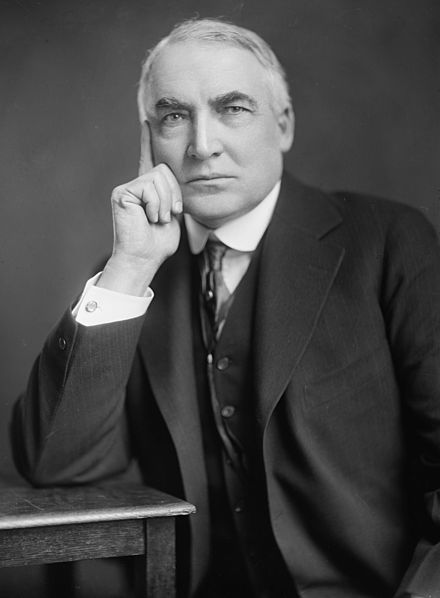
Warren G. Harding, the 29th president of the United States, was notably verbose even for his era.
Sunday, April 16, 2023
allegory
As a literary device or artistic form, an allegory is a narrative or visual representation in which a character, place, or event can be interpreted to represent a hidden meaning with moral or political significance.
Saturday, April 15, 2023
Philology
Philology (from Ancient Greek φιλολογία (philología) 'love of word') is the study of language in oral and written historical sources; it is the intersection of textual criticism, literary criticism, history, and linguistics (with especially strong ties to etymology).
Tuesday, March 28, 2023
adjectival
adjectival (comparative more adjectival, superlative most adjectival)
- Synonym: adjective
- adjectival syntax
Sunday, March 5, 2023
speech act
In the philosophy of language and linguistics, speech act is something expressed by an individual that not only presents information but performs an action as well. For example, the phrase "I would like the kimchi; could you please pass it to me?" is considered a speech act as it expresses the speaker's desire to acquire the kimchi, as well as presenting a request that someone pass the kimchi to them. According to Kent Bach, "almost any speech act is really the performance of several acts at once, distinguished by different aspects of the speaker's intention: there is the act of saying something, what one does in saying it, such as requesting or promising, and how one is trying to affect one's audience".
Tuesday, January 3, 2023
Tirhuta
The Tirhuta or Maithili script is the primary historical script for the Maithili language, as well as one of the historical scripts for Sanskrit.
Wednesday, September 28, 2022
flowery
flowery (comparative flowerier or more flowery, superlative floweriest or most flowery)
-
- (not comparable) Pertaining to flowers.
- Decorated with or abundant in flowers.
- (of a speech or piece of writing) overly complicated or elaborate; with grandiloquent expressions; marked by rhetorical elegance
Monday, September 26, 2022
florid
- Having a rosy or pale red colour; ruddy.
- Elaborately ornate; flowery.
- (of a disorder, especially mental) In a blatant, vivid, or highly disorganized state.
- florid psychosis
- (obsolete) Flourishing; in the bloom of health.
florid (comparative more florid, superlative most florid)
Tuesday, March 29, 2022
holophrasis
In the study of language acquisition, holophrasis is the prelinguistic use of a single word to express a complex idea. A holophrase may resemble an interjection, but whereas an interjection is linguistic, and has a specific grammatical function, a holophrase is simply a vocalization memorized by rote and used without grammatical intent.
Toddlers pass through a holophrastic stage early in life, during which they are able to communicate complex ideas using only single words and simple fixed expressions. As an example, the word "food" might be used to mean "Give me food" and the word "up" could convey "Pick me up".

Thursday, September 16, 2021
Saturday, August 28, 2021
Ionians
The Ionians (/aɪˈoʊniənz/; Greek: Ἴωνες, Íōnes, singular Ἴων, Íōn) were one of the four major tribes that the Greeks considered themselves to be divided into during the ancient period; the other three being the Dorians, Aeolians, and Achaeans. The Ionian dialect was one of the three major linguistic divisions of the Hellenic world, together with the Dorian and Aeolian dialects.

Sunday, January 17, 2021
Signalong
Signalong is an alternative and augmentative key-word signing communication method used by those individuals with a speech, language and communication need. The Signalong methodology has been effectively used with individuals who have cognitive impairments, autism, Down's Syndrome, specific language impairment, multisensory impairment and acquired neurological disorders that have negatively affected the ability to communicate, including stroke patients and English as an additional language.
The name "Signalong" is derived from the understanding that wherever possible the sign is accompanied with speech, hence you "sign along with speech". The programme was devised in 1991 by Gill Kennard, a language teacher, Linda Hall, a science teacher who produced the illustrations and Thelma Grove, a speech and language therapist from the Royal College of Speech & Language Therapists.
Tuesday, April 5, 2016
hyperforeignism

Hyperforeignisms can manifest in a number of ways, including the application of the spelling or pronunciation rules of one language to a word borrowed from another, an incorrect application of a language's pronunciation, and pronouncing anglicized words as though they were borrowed more recently. Hyperforeignisms may similarly occur when a word is thought to be a loanword from a particular language when it is not.
Although similar, words that exhibit deliberate language-play (such as pronouncing Report with a silent ⟨t⟩ in The Colbert Report or ironically pronouncing Target as /tɑːrˈʒeɪ/ tar-ZHAY, as though it were an upscale boutique) are not, strictly speaking, hyperforeignisms. These are, instead, a way of poking fun at those who earnestly adopt foreign-sounding pronunciations of pseudo-loanwords.
Similarly, speakers who echo hyperforeign pronunciations without the intention of approximating a foreign-language pattern are also not practicing hyperforeignization; thus, pronouncing habanero as if it were spelled habañero is not a hyperforeignism if one is not aware that the word has been borrowed from Spanish.
A number of words of French origin feature a final ⟨e⟩ that is pronounced in English but silent in the original language. For example, forte (used to mean "strength" in English as in "not my forte") is often pronounced /ˈfɔːrteɪ/ or /fɔːrˈteɪ/, by confusion with the Italian musical term of the same spelling (but meaning "loud"), which is pronounced [ˈfɔrte]. In French, the term is pronounced [fɔʁt], with silent final ⟨e⟩. Similarly, the noun cache is sometimes pronounced /kæʃeɪ/, as though it were spelled either ⟨cachet⟩(meaning "signature") or ⟨caché⟩(meaning "hidden"). In French, the final ⟨e⟩ is silent and the word is pronounced [kaʃ]. The word cadre is sometimes pronounced /ˈkɑːdreɪ/ in English, as though it were of Spanish origin. In French, the final ⟨e⟩ is silent [kadʁ] and a common English pronunciation is /ˈkɑːdrə/.

The ⟨j⟩ in the name of the Taj Mahal or raj is often rendered /ʒ/, but a closer approximation to the Hindi sound is /dʒ/. The ⟨j⟩ in most words associated with languages of India is more accurately approximated as /dʒ/.
Wednesday, December 23, 2015
capitonym
A capitonym
is a word that changes its meaning (and sometimes pronunciation) when
it is capitalized; the capitalization usually applies due to one form
being a proper noun or eponym. It is a portmanteau of the word capital with the suffix -onym. A capitonym is a form of homograph and – when the two forms are pronounced differently – also of heteronym.
In situations where both words should be capitalized (such as the
beginning of a sentence), there will be nothing to distinguish between
them except the context in which they are used.
Although some pairs, such as march and March, are completely unrelated, in other cases, such as august and catholic, the capitalized form is a name that is etymologically related to the uncapitalized form. For example, August derives from the name of Imperator Augustus, who named himself after the word augustus, whence English august came. Likewise, both Catholic and catholic derive from a Greek adjective meaning "universal".
Capital letters may be used to differentiate between a set of objects, and a particular example of that object. For instance in Astronomical terminology a distinction may be drawn between a moon, any natural satellite, and the Moon, to be specific the natural satellite of Earth. Likewise, Sun with a capital may be used to emphasise that the sun of Earth is under discussion.
Although some pairs, such as march and March, are completely unrelated, in other cases, such as august and catholic, the capitalized form is a name that is etymologically related to the uncapitalized form. For example, August derives from the name of Imperator Augustus, who named himself after the word augustus, whence English august came. Likewise, both Catholic and catholic derive from a Greek adjective meaning "universal".
Capital letters may be used to differentiate between a set of objects, and a particular example of that object. For instance in Astronomical terminology a distinction may be drawn between a moon, any natural satellite, and the Moon, to be specific the natural satellite of Earth. Likewise, Sun with a capital may be used to emphasise that the sun of Earth is under discussion.
Thursday, October 1, 2015
Polysemy
Polysemy (from Greek: πολυ-, poly-, "many" and σῆμα, sêma, "sign") is the capacity for a sign (e.g., a word, phrase, etc.) or signs to have multiple related meanings (sememes), i.e., a large semantic field. It is usually regarded as distinct from homonymy, in which the multiple meanings of a word may be unconnected or unrelated.
Charles Fillmore and Beryl Atkins’ definition stipulates three elements: (i) the various senses of a polysemous word have a central origin, (ii) the links between these senses form a network, and (iii) understanding the ‘inner’ one contributes to understanding of the ‘outer’ one.
Polysemy is a pivotal concept within disciplines such as media studies and linguistics.
Charles Fillmore and Beryl Atkins’ definition stipulates three elements: (i) the various senses of a polysemous word have a central origin, (ii) the links between these senses form a network, and (iii) understanding the ‘inner’ one contributes to understanding of the ‘outer’ one.
Polysemy is a pivotal concept within disciplines such as media studies and linguistics.
Monday, August 10, 2015
isogram
An isogram (also known as a "nonpattern word") is a logological
term for a word or phrase without a repeating letter. It is also used
by some to mean a word or phrase in which each letter appears the same
number of times, not necessarily just once. Conveniently, the word itself is an isogram.
In the book Language on Vacation: An Olio of Orthographical Oddities, Dmitri Borgmann tries to find the longest isogrammic word. The longest one he found was "Dermatoglyphics" at 15 letters. He coins several longer hypothetical words, such as "thumbscrew-japingly" (18 letters, defined as "as if mocking a thumbscrew") and, with the "uttermost limit in the way of verbal creativeness", "pubvexingfjord-schmaltzy" (23 letters, defined as "as if in the manner of the extreme sentimentalism generated in some individuals by the sight of a majestic fjord, which sentimentalism is annoying to the clientele of an English inn").
In the book Making the Alphabet Dance, Ross Eckler reports the word "subdermatoglyphic" (17 letters) can be found in Lowell Goldmith's article Chaos: To See a World in a Grain of Sand and a Heaven in a Wild Flower. He also found the name "Melvin Schwarzkopf" (17 letters), a man living in Alton, Illinois, and proposed the name "Emily Jung Schwartzkopf" (21 letters). In an elaborate story, Eckler talked about a group of scientists who name the unavoidable urge to speak in pangrams the "Hjelmqvist-Gryb-Zock-Pfund-Wax syndrome".
The longest German isogram is "Heizölrückstoßabdämpfung" (heating oil recoil dampening) with 24 letters, closely followed by "Boxkampfjuryschützlinge" (box fight jury fosterlings) and "Zwölftonmusikbücherjagd" (twelve-tone music book chase) with 23 letters.
In the book Language on Vacation: An Olio of Orthographical Oddities, Dmitri Borgmann tries to find the longest isogrammic word. The longest one he found was "Dermatoglyphics" at 15 letters. He coins several longer hypothetical words, such as "thumbscrew-japingly" (18 letters, defined as "as if mocking a thumbscrew") and, with the "uttermost limit in the way of verbal creativeness", "pubvexingfjord-schmaltzy" (23 letters, defined as "as if in the manner of the extreme sentimentalism generated in some individuals by the sight of a majestic fjord, which sentimentalism is annoying to the clientele of an English inn").
In the book Making the Alphabet Dance, Ross Eckler reports the word "subdermatoglyphic" (17 letters) can be found in Lowell Goldmith's article Chaos: To See a World in a Grain of Sand and a Heaven in a Wild Flower. He also found the name "Melvin Schwarzkopf" (17 letters), a man living in Alton, Illinois, and proposed the name "Emily Jung Schwartzkopf" (21 letters). In an elaborate story, Eckler talked about a group of scientists who name the unavoidable urge to speak in pangrams the "Hjelmqvist-Gryb-Zock-Pfund-Wax syndrome".
The longest German isogram is "Heizölrückstoßabdämpfung" (heating oil recoil dampening) with 24 letters, closely followed by "Boxkampfjuryschützlinge" (box fight jury fosterlings) and "Zwölftonmusikbücherjagd" (twelve-tone music book chase) with 23 letters.
Subscribe to:
Posts (Atom)
synanthrope
A synanthrope (from ancient Greek σύν sýn "together, with" and ἄνθρωπος ánthrōpos "man") is an organism that evolve...

-
A canary trap is a method for exposing an information leak by giving different versions of a sensitive document to each of several suspec...
-
A synanthrope (from ancient Greek σύν sýn "together, with" and ἄνθρωπος ánthrōpos "man") is an organism that evolve...
-
 A kouros (plural kouroi , Ancient Greek κοῦρος ) is the modern term given to those representations of male youths which first appear i...

