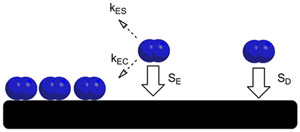
Two adsorbate nitrogen molecules adsorbing onto a tungsten adsorbent
from the precursor state around an island of previously adsorbed
adsorbate (left) and via random adsorption (right)
Laurel water is distilled from the fresh leaves of the cherry laurel, and contains the poison prussic acid (hydrocyanic acid), along with other products carried over in the process.
There are many instances of people drinking Sterno to become intoxicated as a form of surrogate alcohol.
Since the alcohol it contains is denatured, Sterno is poisonous.
Moreover, the methanol it contains can cause permanent blindness by
destruction of the optic nerves. Bluesman Tommy Johnson alludes to the practice in his song "Canned Heat Blues" recorded in 1928. The blues band Canned Heat derived their name from the song.
Silane is an inorganic compound with chemical formula, SiH4. It is a colourless, pyrophoric, toxic gas with a sharp, repulsive smell, somewhat similar to that of acetic acid.[5] Silane is of practical interest as a precursor to elemental silicon. Silane with alkyl groups are effective water repellents for mineral surfaces such as concrete and masonry.
Homochirality is a uniformity of chirality,
or handedness. Objects are chiral when they cannot be superposed on
their mirror images. For example, the left and right hands of a human
are approximately mirror images of each other but are not their own
mirror images, so they are chiral. In biology, 19 of the 20 natural amino acids are homochiral, being L-chiral (left-handed), while sugars are D-chiral (right-handed). Homochirality can also refer to enantiopure substances in which all the constituents are the same enantiomer (a right-handed or left-handed version of an atom or molecule), but some sources discourage this use of the term.
It is unclear whether homochirality has a purpose; however, it appears to be a form of information storage. One suggestion is that it reduces entropy barriers in the formation of large organized molecules. It has been experimentally verified that amino acids form large aggregates in larger abundance from an enantiopure samples of the amino acid than from racemic (enantiomerically mixed) ones.
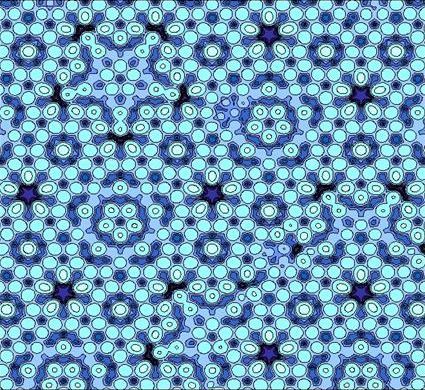
It is not clear whether homochirality emerged before or after life, and many mechanisms for its origin have been proposed. Some of these models propose three distinct steps: mirror-symmetry breaking creates a minute enantiomeric imbalance, chiral amplification builds on this imbalance, and chiral transmission is the transfer of chirality from one set of molecules to another.
HSP60, also known as chaperonins (Cpn), is a family of heat shock proteins
originally sorted by their 60kDa molecular mass. They prevent
misfolding of proteins during stressful situations such as high heat, by
assisting protein folding. HSP60 belong to a large class of molecules
that assist protein folding, called molecular chaperones.
Fractionation is a separation process in which a certain quantity of a mixture (gas, solid, liquid, enzymes, suspension, or isotope) is divided during a phase transition, into a number of smaller quantities (fractions) in which the composition varies according to a gradient.
Fractions are collected based on differences in a specific property of
the individual components. A common trait in fractionations is the need
to find an optimum between the amount of fractions collected and the
desired purity in each fraction. Fractionation makes it possible to
isolate more than two components in a mixture in a single run. This
property sets it apart from other separation techniques.
Acid test (gold),
a chemical or metallurgical test which uses acid, now also used as a
general term for "verified", "approved", or "tested" in a large number
of fields.
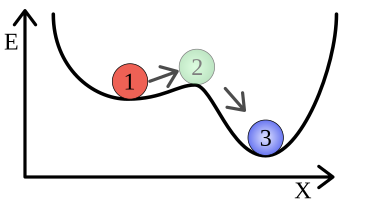
(physics,chemistry) Of or pertaining to a physical or chemical state that is relatively long-lived, but may decay to a lower energy state when slightly perturbed or through a quantum transition.
Metastability describes the behaviour of certain physical systems that can exist in long lived states that are less stable than the system's most stable state.
The parameters of excited systems may reach and hold stationary values (a metastable state).
But metastable states have finite lifetimes. After a (potentially very
long) period of time, spontaneously or under an external action, the
characteristic parameters of the state change again to relax to a more
stable state.
Congener (from Latincongener "of the same race or kind," from com- "together" + gener-, stem of genus "kind") has several different meanings depending on the field in which it is used. Colloquially, it is used to mean a person or thing like another, in character or action.
In biology, congeners are organisms within the same genus. A related term -- referring to members of the same species -- is conspecific.
In chemistry, congeners are related chemicals, e.g., elements in the same group of the periodic table, or derivatives thereof.
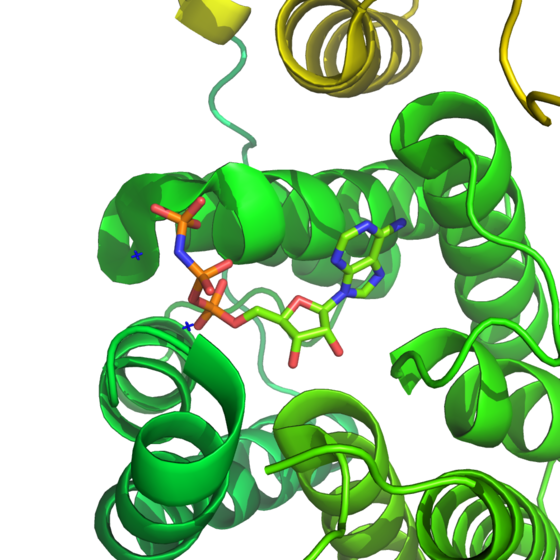
A kinesin is a protein belonging to a class of motor proteins found in eukaryotic cells. Kinesins move along microtubule filaments, and are powered by the hydrolysis of ATP (thus kinesins are ATPases). The active movement of kinesins supports several cellular functions including mitosis, meiosis and transport of cellular cargo, such as in axonal transport. Most kinesins walk towards the plus end of a microtubule, which, in most cells, entails transporting cargo from the centre of the cell towards the periphery. This form of transport is known as anterograde transport.
Grayanotoxins are a group of closely related toxins found in rhododendrons and other plants of the family Ericaceae. They can be found in honey made from their nectar and cause a very rare poisonous reaction called grayanotoxin poisoning, honey intoxication, or rhododendron poisoning. The toxins are also known as andromedotoxin, acetylandromedol, or rhodotoxin.