Showing posts with label water. Show all posts

Sunday, November 19, 2023

Thursday, August 3, 2023

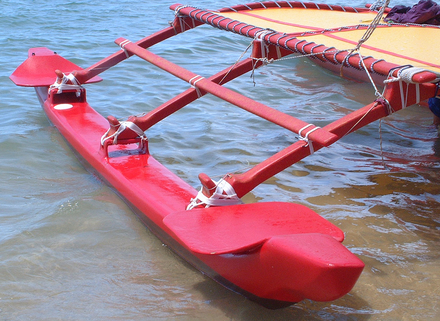
outrigger

 An outrigger is a projecting structure on a boat, with specific meaning depending on types of vessel. Outriggers may also refer to legs on a wheeled vehicle that are folded out when it needs stabilization, for example on a crane that lifts heavy loads. 


Friday, July 14, 2023

globster

  globster or blob is an unidentified organic mass that washes up on the shoreline of an ocean or other body of water. A globster is distinguished from a normal beached carcass by being hard to identify, at least by initial untrained observers, and by creating controversy as to its identity. 


Saturday, February 11, 2023

bifurcation lake

 A bifurcation lake is a lake that has outflows into two different drainage basins and thus the drainage divide cannot be defined exactly because it is situated in the middle of the lake. 


Peeler Lake in California's Hoover Wilderness is a natural bifurcated lake that lies along the Great Basin Divide. It has two outlets, one of which drains east into the Great Basin, and one of which drains west to the Pacific Ocean.

Friday, September 30, 2022

Friday, September 16, 2022

Saturday, July 9, 2022

seiche

A seiche is a standing wave oscillating in a body of water.
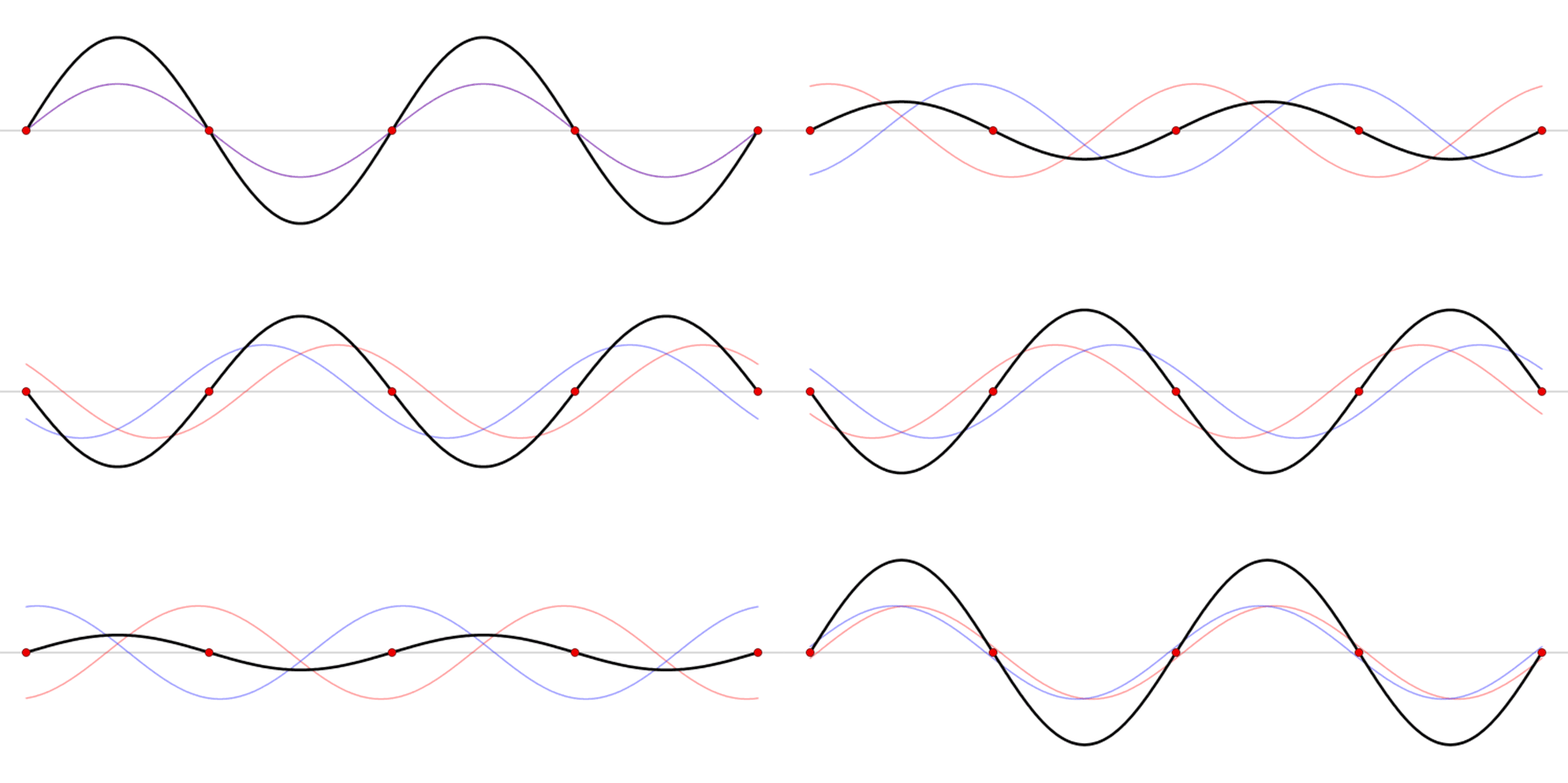

Seiches are typically caused when strong winds and rapid changes in atmospheric pressure push water from one end of a body of water to the other. When the wind stops, the water rebounds to the other side of the enclosed area.

Thursday, July 7, 2022

Silcock

 Silcock (and sillcock), same as "spigot", referring to a "cock" (as in stopcock and petcock) that penetrates a foundation sill. A valve controlling the release of water.


Monday, June 13, 2022

Thursday, May 12, 2022

Aquitard

 Aquitard:

Poorly permeable underground layer that limits the flow of groundwater from one aquifer to another.

Sunday, April 17, 2022

Meltwater

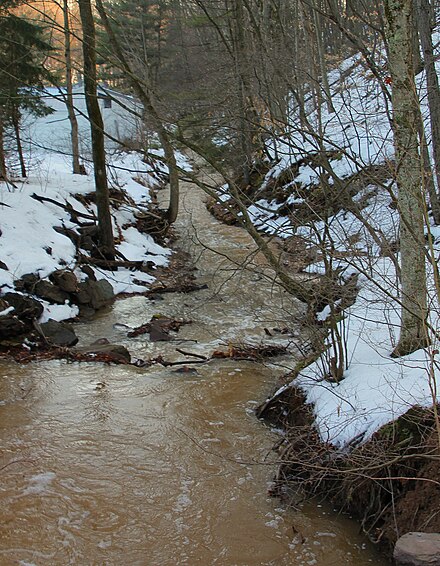
 Meltwater is water released by the melting of snow or ice, including glacial ice, tabular icebergs and ice shelves over oceans. Meltwater is often found in the ablation zone of glaciers, where the rate of snow cover is reducing. Meltwater can be produced during volcanic eruptions, in a similar way in which the more dangerous lahars form. 


Wednesday, September 22, 2021

nutria

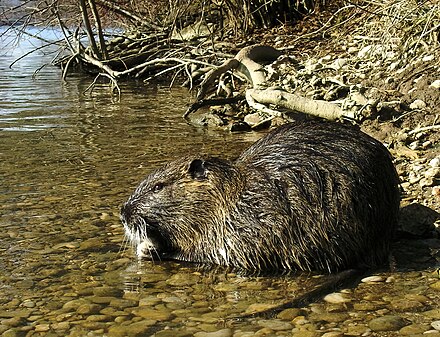
 The coypu (from Spanish coipú, from Mapudungun koypu; Myocastor coypus), also known as the nutria, is a large, herbivorous, semiaquatic rodent. Classified for a long time as the only member of the family Myocastoridae, Myocastor is now included within Echimyidae, the family of the spiny rats.


Friday, March 25, 2016

sump

A sump (American English and some parts of Canada: oil pan) is a low space that collects any often-undesirable liquids such as water or chemicals. A sump can also be an infiltration basin used to manage surface runoff water and recharge underground aquifers.[1] Sump can also refer to an area in a cave where an underground flow of water exits the cave into the earth.

Sunday, January 24, 2016

cryoseism

A cryoseism, also known as an ice quake or a frost quake, may be caused by a sudden cracking action in frozen soil or rock saturated with water or ice. As water drains into ground, it may eventually freeze and expand under colder temperatures, putting stress on its surroundings. This stress builds up until relieved explosively in the form of a cryoseism.
Another type of cryoseism is a non-tectonic seismic event caused by sudden glacial movements. This movement has been attributed to a veneer of water which may pool underneath a glacier sourced from surface ice melt. Hydraulic pressure of the liquid can act as a lubricant, allowing the glacier to suddenly shift position. This type of cryoseism can be very brief, or may last for several minutes.
The requirements for a cryoseism to occur are numerous; therefore, accurate predictions are not entirely possible and may constitute a factor in structural design and engineering when constructing in an area historically known for such events. Speculation has been made between global warming and the frequency of cryoseisms.

Monday, September 14, 2015

Scuttling

Scuttling is the act of deliberately sinking a ship by allowing water to flow into the hull.

Monument to the Scuttled Ships by Amandus Adamson, just off the promenade at Sevastopol.
 
This can be achieved in several ways—valves or hatches can be opened to the sea, or holes may be ripped into the hull with brute force or with explosives. Scuttling may be performed to dispose of an abandoned, old, or captured vessel; to prevent the vessel from becoming a navigation hazard; as an act of self-destruction to prevent the ship from being captured by an enemy force; as a blockship to restrict navigation through a channel or within a harbor; or to provide an artificial reef for divers and marine life.

Wednesday, April 15, 2015

Hypernatremia

Hypernatremia or hypernatraemia (see American and British English spelling differences) is an electrolyte disturbance that is defined by an elevated sodium level in the blood. Hypernatremia is generally not caused by an excess of sodium, but rather by a relative deficit of free water in the body. For this reason, hypernatremia is often synonymous with the less precise term, dehydration.

Saturday, January 17, 2015

Gabbart

A Gabbart is a type of lighter or barge, used in the 17th through 19th century. They are small one-masted sailing or coasting vessel. Used mostly for inland navigation, especially on the River Clyde in Scotland. Transported mainly coal and fish (mainly herring). Comment from 1877: Gabbarts: Boats of from 30 to 40 tons, which, before the railway was opened to Balloch, carried coals etc., from the Clyde, up the River Leven, to various places on the banks of the Loch, taking back cargoes of slates or timber.

Sunday, August 3, 2014

Rogue wave


Rogue waves (also known as freak waves, monster waves, killer waves, extreme waves, and abnormal waves) are relatively large and spontaneous ocean surface waves that occur far out at sea, and are a threat even to large ships and ocean liners. In oceanography, they are more precisely defined as waves whose height is more than twice the significant wave height (SWH), which is itself defined as the mean of the largest third of waves in a wave record. Therefore rogue waves are not necessarily the biggest waves found at sea; they are, rather, surprisingly large waves for a given sea state. Rogue waves seem not to have a single distinct cause, but occur where physical factors such as high winds and strong currents cause waves to merge to create a single exceptionally large wave.

Thursday, November 14, 2013

EPIRB


EPIRB, are tracking transmitters which aid in the detection and location of boats, aircraft, and people in distress. Strictly, they are radiobeacons that interface with worldwide offered service of Cospas-Sarsat, the international satellite system for search and rescue (SAR). When manually activated, or automatically activated upon immersion, such beacons send out a distress signal. The signals are monitored worldwide and the location of the distress is detected by non-geostationary satellites, and can be located by trilateration in combination with triangulation, respecting the varying quality of the signal received.

synanthrope

 A synanthrope (from ancient Greek σύν sýn "together, with" and ἄνθρωπος ánthrōpos "man") is an organism that evolve...