Showing posts with label animation. Show all posts

Saturday, September 27, 2014

zoetrope


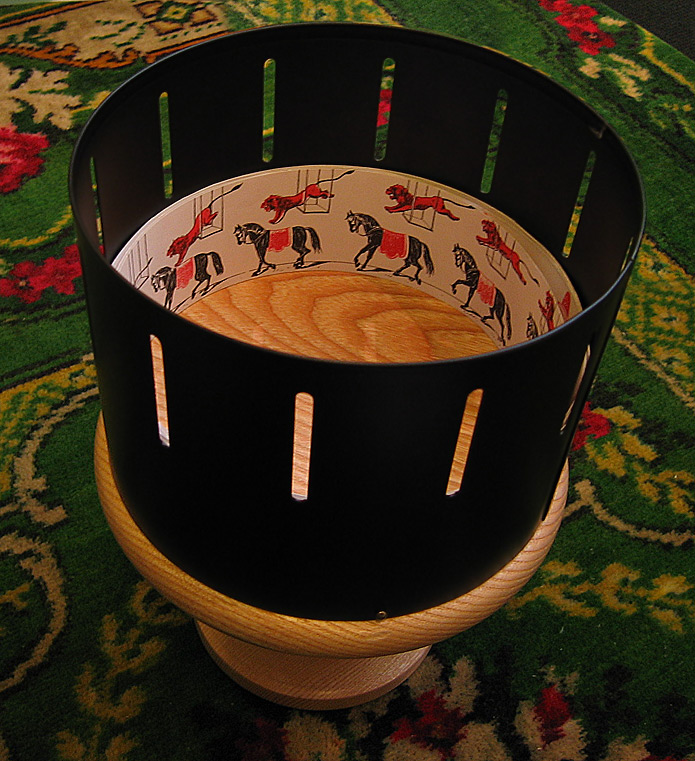
A zoetrope is a device that produces the illusion of motion from a rapid succession of static pictures. The term zoetrope is from the Greek words ζωή (zoe), meaning "alive, active", and τροπή (trope), meaning "turn". "Zoetrope" taken to mean "active turn".

The zoetrope consists of a cylinder with slits cut vertically in the sides. On the inner surface of the cylinder is a band with images from a set of sequenced pictures. As the cylinder spins, the user looks through the slits at the pictures across. The scanning of the slits keeps the pictures from simply blurring together, and the user sees a rapid succession of images, producing the illusion of motion.

Sunday, February 17, 2013

Supermarionation


Supermarionation (a portmanteau of "super", "marionette" and "animation") is a puppetry technique devised in the 1960s by British production company AP Films. It was used extensively in the company's numerous Gerry and Sylvia Anderson-produced action-adventure series, the most famous of which was Thunderbirds. The term was coined by Gerry Anderson, possibly in imitation of "Dynamation", Ray Harryhausen's stop motion technique.

Sunday, October 23, 2011

Puppetoon

Puppetoon animation is a type of replacement animation, which is itself a type of stop-motion animation. In traditional stop-motion, the puppets are made with movable parts which are repositioned between frames to create the illusion of motion when the frames are played in rapid sequence. In puppetoon animation the puppets are rigid and static pieces; each is typically used in a single frame and then switched with a separate, near-duplicate puppet for the next frame.

Thursday, October 7, 2010

seiyū

A seiyū (声優) is a Japanese voice actor that works in radio, television, or movies. Seiyū perform voice-overs for non-Japanese movies, provide narration, and also work as anime and video game character actors. The term "seiyū" is conventionally used among English-speaking fans to denote the Japanese actor and "vocal actor" or "voice actor" when referring to a character actor in a series translated into English. Magazines focusing specifically on seiyū are published in Japan, with Voice Animage being the most well known and longest running.

synanthrope

 A synanthrope (from ancient Greek σύν sýn "together, with" and ἄνθρωπος ánthrōpos "man") is an organism that evolve...