not autistic
Hoosier Hysteria is the state of excitement surrounding basketball in Indiana or, more specifically, the Indiana high school basketball tournament.[
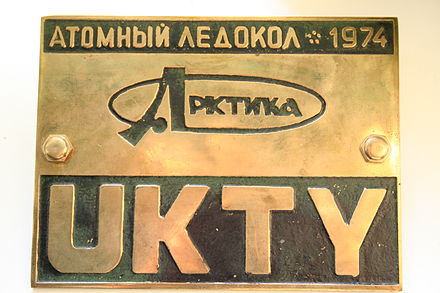
In broadcasting and radio communications, a call sign (also known as a call name or call letters—and historically as a call signal—or abbreviated as a call) is a unique identifier for a transmitter station. A call sign can be formally assigned by a government agency, informally adopted by individuals or organizations, or even cryptographically encoded to disguise a station's identity. The use of call signs as unique identifiers dates to the landline railroad telegraph system. Because there was only one telegraph line linking all railroad stations, there needed to be a way to address each one when sending a telegram. In order to save time, two-letter identifiers were adopted for this purpose. This pattern continued in radiotelegraph operation; radio companies initially assigned two-letter identifiers to coastal stations and stations on board ships at sea. These were not globally unique, so a one-letter company identifier (for instance, 'M' and two letters as a Marconi station) was later added. By 1912, the need to quickly identify stations operated by multiple companies in multiple nations required an international standard; an ITU prefix would be used to identify a country, and the rest of the call sign an individual station in that country.
sardoodledom (uncountable)
(uncommon) Well-made works of drama that have trivial, insignificant or melodramatic plots.
The radiotelephony message PAN-PAN is the international standard urgency signal that someone aboard a boat, ship, aircraft, or other vehicle uses to declare that they need help and that the situation is urgent, but for the time being, does not pose an immediate danger to anyone's life or to the vessel itself. This is referred to as a state of "urgency". This is distinct from a mayday call (distress signal), which means that there is imminent danger to life or to the continued viability of the vessel itself. Radioing "pan-pan" informs potential rescuers (including emergency services and other craft in the area) that an urgent problem exists, whereas "mayday" calls on them to drop all other activities and immediately begin a rescue.
Mono no aware (物の哀れ), lit. 'the pathos of things', and also translated as 'an empathy toward things', or 'a sensitivity to ephemera', is a Japanese idiom for the awareness of impermanence (無常, mujō), or transience of things, and both a transient gentle sadness (or wistfulness) at their passing as well as a longer, deeper gentle sadness about this state being the reality of life.
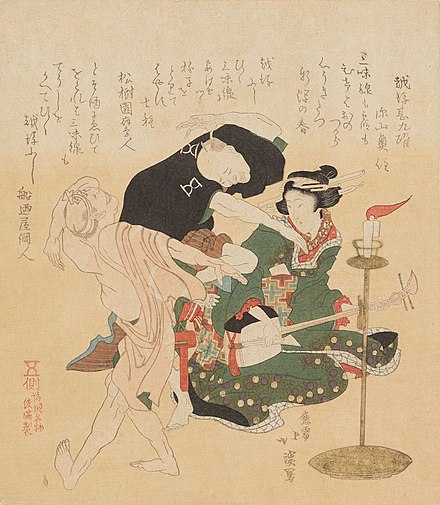
A synanthrope (from ancient Greek σύν sýn "together, with" and ἄνθρωπος ánthrōpos "man") is an organism that evolve...


