Monday, November 7, 2022

Gytrash


The Gytrash , a legendary black dog known in Northern England, was said to haunt lonely roads awaiting travelers. Appearing in the shape of horses, mules, cranes or dogs, the Gytrash haunt solitary ways and lead people astray, but they can also be benevolent, guiding lost travelers to the right road. They are usually feared.

In some parts of Lincolnshire and Yorkshire, the Gytrash was known as the Shagfoal and took the form of a spectral mule or donkey with eyes that glowed like burning coals. In this form, the beast was believed to be purely malevolent. 


Sunday, November 6, 2022

liminality

 In anthropology, liminality (from the Latin word līmen, meaning "a threshold") is the quality of ambiguity or disorientation that occurs in the middle stage of a rite of passage, when participants no longer hold their pre-ritual status but have not yet begun the transition to the status they will hold when the rite is complete.

More recently, usage of the term has broadened to describe political and cultural change as well as rites. During liminal periods of all kinds, social hierarchies may be reversed or temporarily dissolved, continuity of tradition may become uncertain, and future outcomes once taken for granted may be thrown into doubt.


Saturday, November 5, 2022

amanuensis

 An amanuensis (/əˌmænjuˈɛnsɪs/) is a person employed to write or type what another dictates or to copy what has been written by another, and also refers to a person who signs a document on behalf of another under the latter's authority. In one example Eric Fenby assisted the blind composer Frederick Delius in writing down the notes that Delius dictated. 


Friday, November 4, 2022

Torschlusspanik


Torschlusspanik f (genitive Torschlusspanik, no plural)

eleventh hour panic (the fear that time to act is running out)

From Tor +‎ Schluss +‎ Panik, literally gate-shut panic. For safety reasons city gates used to be shut at nightfall (Torschluss, from Tor +‎ Schluss), leaving latecomers no other choice than to stay outside, thereby exposing them to various dangers. 


Thursday, November 3, 2022

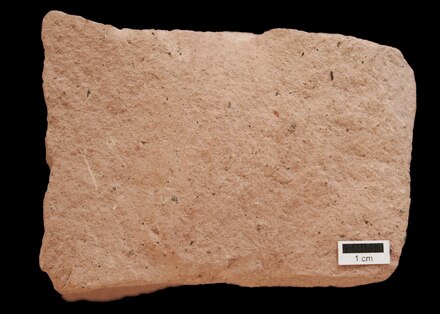
Rhyolite

 Rhyolite (/ˈr.əlt/ RY-ə-lyte) is the most silica-rich of volcanic rocks. It is generally glassy or fine-grained (aphanitic) in texture, but may be porphyritic, containing larger mineral crystals (phenocrysts) in an otherwise fine-grained groundmass. The mineral assemblage is predominantly quartz, sanidine, and plagioclase. It is the extrusive equivalent to granite.


Tuesday, November 1, 2022

rerebrace

 A rerebrace (sometimes known as an upper cannon) is a piece of armour designed to protect the upper arms (above the elbow). Splint rerebraces were a feature of Byzantine armour in the Early Medieval period. The rerebrace seems to have re-emerged in England, in the early 14th century. As part of the full plate armour of the Late Middle Ages and Renaissance the rerebrace was a tubular piece of armour between the shoulder defences (spaulder or pauldron) and the elbow protection (couter). 


synanthrope

 A synanthrope (from ancient Greek σύν sýn "together, with" and ἄνθρωπος ánthrōpos "man") is an organism that evolve...