Pachycauls are plants with a disproportionately thick trunk for their height, and few branches. In contrast, trees with thin twigs such as Oak (Quercus), Maple (Acer) and Eucalyptus are called leptocauls while those with moderately thick twigs like Plumeria are called mesocauls. Pachycauly can be the product of exceptional primary growth (as with palms and cycads) or disproportionate secondary growth as with the Baobabs (Adansonia). The word is derived from the Greek pachy- meaning thick or stout, and Latin caulis meaning the stem.
Thursday, November 16, 2023
Wednesday, November 15, 2023
Monday, May 1, 2023
bract
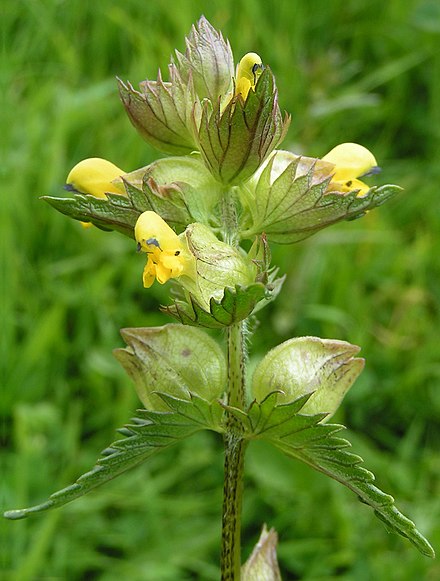
In botany, a bract is a modified or specialized leaf, especially one associated with a reproductive structure such as a flower, inflorescence axis or cone scale. Bracts are usually different from foliage leaves. They may be smaller, larger, or of a different color, shape, or texture. Typically, they also look different from the parts of the flower, such as the petals or sepals.
Tuesday, April 25, 2023
Marcescence
Marcescence is the withering and persistence of plant organs that normally are shed, and is a term most commonly applied to plant leaves.
Monday, April 24, 2023
Monday, September 13, 2021
Ethnobotany
Ethnobotany is the study of a region's plants and their practical uses through the traditional knowledge of a local culture and people. An ethnobotanist thus strives to document the local customs involving the practical uses of local flora for many aspects of life, such as plants as medicines, foods, intoxicants and clothing.
Intellectual property rights and benefit-sharing arrangements are important issues in ethnobotany.
Friday, August 5, 2011
Variegation
synanthrope
A synanthrope (from ancient Greek σύν sýn "together, with" and ἄνθρωπος ánthrōpos "man") is an organism that evolve...
-
A canary trap is a method for exposing an information leak by giving different versions of a sensitive document to each of several suspec...
-
A hyperforeignism is a type of qualitative hypercorrection that involves speakers misidentifying the distribution of a pattern found in ...
-
Nureongi (누렁이) and Hwangu (황구; 黃狗) are Korean terms meaning "Yellow Dog" used to refer to tannish mongrel or landrace of dog in...