Lordosis is historically defined as an abnormal inward curvature of the lumbar spine.
Showing posts with label medical. Show all posts
Showing posts with label medical. Show all posts
Thursday, January 11, 2024

Thursday, March 30, 2023
Hypergraphia
Hypergraphia is a behavioral condition characterized by the intense desire to write or draw. Forms of hypergraphia can vary in writing style and content. It is a symptom associated with temporal lobe changes in epilepsy and in Geschwind syndrome.

Tuesday, February 14, 2023
Dysmenorrhea
Dysmenorrhea is a Greek term for “painful monthly bleeding.” Dysmenorrhea can be classified as primary and secondary dysmenorrhea. Primary dysmenorrhea is a lower abdominal pain happening during the menstrual cycle, which is not associated with other diseases or pathology. In contrast, secondary dysmenorrhea is usually associated with other pathology inside or outside the uterus.
Thursday, November 10, 2022
Sunday, July 3, 2022
poultice
A poultice, also called a cataplasm, is a soft moist mass, often heated and medicated, that is spread on cloth and placed over the skin to treat an aching, inflamed or painful part of the body. It can be used on wounds such as cuts.
'Poultice' may also refer to a porous solid filled with solvent used to remove stains from porous stone such as marble or granite.
The word "poultice" comes from the Greek word "poltos" transformed in the Latin puls, pultes, meaning "porridge".

Saturday, June 18, 2022
Nystatin
Nystatin, sold under the brandname Mycostatin among others, is an antifungal medication It is used to treat Candida infections of the skin including diaper rash, thrush, esophageal candidiasis, and vaginal yeast infections. It may also be used to prevent candidiasis in those who are at high risk. Nystatin may be used by mouth, in the vagina, or applied to the skin.

Wednesday, March 2, 2022
sequela
A sequela (UK: /sɪˈkwiːlə/, US: /sɪˈkwɛlə/; usually used in the plural, sequelae /-iː/) is a pathological condition resulting from a disease, injury, therapy, or other trauma. Derived from the Latin word, meaning “sequel”, it is used in the medical field to mean a complication or condition following a prior illness or disease.

Thursday, February 3, 2022
bolus
In medicine, a bolus (from Latin bolus, ball) is the administration of a discrete amount of medication, drug, or other compound within a specific time, generally 1–30 minutes, in order to raise its concentration in blood to an effective level. The administration can be given by injection: intravenously, intramuscularly, intrathecally, subcutaneously, or by inhalation.[clarification needed] The article on routes of administration provides more information, as the preceding list of ROAs is not exhaustive.

Thursday, January 20, 2022
exogeny
In a variety of contexts, exogeny or exogeneity (from Greek ἔξω éxō 'outside' and -γένεια -géneia 'to produce') is the fact of an action or object originating externally. It contrasts with endogeneity or endogeny, the fact of being influenced within a system.
Monday, April 19, 2021
phlebotomist
Phlebotomy is the process of making a puncture in a vein usually in the arm, with a cannula, for the purpose of drawing blood. The procedure itself is known as a venipuncture, which is also used for intravenous therapy. A person who performs a phlebotomy is called a phlebotomist, although most doctors, nurses, and other technicians can also carry out a phlebotomy. In contrast, phlebectomy is the removal of a vein.

Saturday, April 3, 2021
perfusionist
A cardiovascular perfusionist, clinical perfusionist' or perfusiologist or clinical perfusion scientist, is a healthcare professional who operates the cardiopulmonary bypass machine (heart–lung machine) during cardiac surgery and other surgeries that require cardiopulmonary bypass to manage the patient's physiological status.
Sunday, June 17, 2018
tum
tum | tʌm | noun informal a person's stomach or abdomen. ORIGIN mid 19th century: abbreviation of tummy.
Monday, August 29, 2016
fascia
A fascia (/ˈfæʃə/, /ˈfæʃiə/; plural fasciae /ˈfæʃᵻ.i/; adjective fascial; from Latin: "band") is a band or sheet of connective tissue, primarily collagen, beneath the skin that attaches, stabilizes, encloses, and separates muscles and other internal organs.[1] Fascia is classified by layer, as superficial fascia, deep fascia, and visceral or parietal fascia, or by its function and anatomical location.
Sunday, April 10, 2016
Thursday, April 7, 2016
Dyspareunia
Dyspareunia is painful sexual intercourse
due to medical or psychological causes. The symptoms are significantly
more common in women than in men. The pain can primarily be on the
external surface of the genitalia, or deeper in the pelvis upon deep pressure against the cervix.
It can affect a small portion of the vulva or vagina or be felt all
over the surface. Understanding the duration, location, and nature of
the pain is important in identifying the causes of the pain.
Friday, October 9, 2015
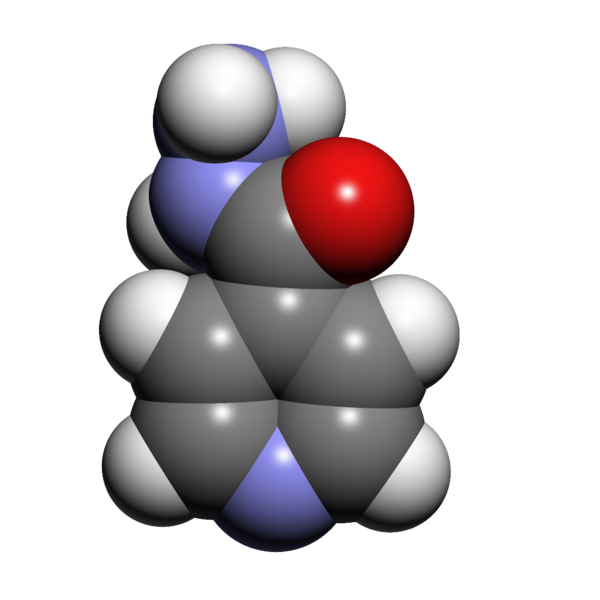
isonicotinylhydrazine
Isoniazid (Laniazid, Nydrazid), also known as isonicotinylhydrazine (INH), is an organic compound that is the first-line medication in prevention and treatment of tuberculosis. The compound was first synthesized in the early 20th century,
but its activity against tuberculosis was first reported in the early
1950s, and three pharmaceutical companies attempted unsuccessfully to
simultaneously patent the drug (the most prominent one being Roche, which launched its version, Rimifon, in 1952). The drug was first tested at Many Farms, a Navajo community, due to the Navajo reservation's dire tuberculosis problem and the fact that the population was naïve with respect to streptomycin, the main tuberculosis treatment at the time. With the introduction of isoniazid, a cure for tuberculosis was first considered reasonable.

Thursday, October 8, 2015
Pseudohermaphroditism
Pseudohermaphroditism, or pseudo-hermaphroditism, is the condition in which an organism is born with secondary sex characteristics or a phenotype that is different from what would be expected on the basis of the gonadal tissue (ovary or testis).
In some cases, the external sex organs look intermediate between the typical clitoris or penis. In other cases, the external sex organs have an appearance that does not look intermediate, but rather has the appearance that would be expected to be seen with the "opposite" gonadal tissue. Because of this, pseudohermaphroditism is sometimes not identified until puberty. It is possible for the condition to be undetected until adulthood.
In some cases, the external sex organs look intermediate between the typical clitoris or penis. In other cases, the external sex organs have an appearance that does not look intermediate, but rather has the appearance that would be expected to be seen with the "opposite" gonadal tissue. Because of this, pseudohermaphroditism is sometimes not identified until puberty. It is possible for the condition to be undetected until adulthood.
Wednesday, October 7, 2015
SYNGENESIOTRANSPLANTATION
SYNGENESIOTRANSPLANTATION
a graft of material or tissue between closely related individuals of the same species
Tuesday, May 19, 2015
Spasticity
Spasticity is a feature of altered skeletal muscle performance in muscle tone involving hypertonia; it is also referred to as an unusual "tightness", stiffness, and/or "pull" of muscles. The word spasm comes from the Greek word, σπασμός (spasmos), meaning to pull or drag.
Clinically spasticity is defined as velocity dependent resistance to stretch, where a lack of inhibition results in excessive contraction of the muscles, ultimately leading to hyperflexia (overly flexed joints). It mostly occurs in disorders of the central nervous system (CNS) impacting the upper motor neuron in the form of a lesion, such as spastic diplegia, but it can also present in various types of multiple sclerosis, where it occurs as a symptom of the progressively-worsening attacks on myelin sheaths and is thus unrelated to the types of spasticity present in neuromuscular cerebral palsy rooted spasticity disorders.
Sunday, May 10, 2015
Argyria
Argyria (from Greek: ἄργυρος argyros silver + -ia) is a condition caused by improper exposure to chemical forms of the element silver, silver dust, or silver compounds. The most dramatic symptom of argyria is that the skin becomes blue or bluish-grey colored. Argyria may be found as generalized argyria or local argyria. Argyrosis is the corresponding condition related to the eye.
Subscribe to:
Posts (Atom)
synanthrope
A synanthrope (from ancient Greek σύν sýn "together, with" and ἄνθρωπος ánthrōpos "man") is an organism that evolve...

-
A canary trap is a method for exposing an information leak by giving different versions of a sensitive document to each of several suspec...
-
A synanthrope (from ancient Greek σύν sýn "together, with" and ἄνθρωπος ánthrōpos "man") is an organism that evolve...
-
 A kouros (plural kouroi , Ancient Greek κοῦρος ) is the modern term given to those representations of male youths which first appear i...

