Sunday, April 27, 2025

synanthrope

 A synanthrope (from ancient Greek σύν sýn "together, with" and ἄνθρωπος ánthrōpos "man") is an organism that evolved to live near humans and benefit from human settlements and their environmental modifications (see also anthropophilia for animals who live close to humans as parasites). The term includes many animals and plants regarded as pests or weeds, but does not include domesticated species. Common synanthrope habitats include houses, sheds and barns, non-building structures, gardens, parks, farms, road verges and rubbish dumps

 Examples:

  • mice
  • pigeons
  • seagulls
  • monkeys


Tuesday, March 25, 2025

Solastalgia

 Solastalgia (/ˌsɒləˈstælə/) is a neologism, formed by the combination of the Latin words sōlācium (solace or comfort), 'solus' (desolation) with meanings connected to devastation, deprivation of comfort, abandonment and loneliness and the Greek root -algia (pain, suffering, grief), that describes a form of emotional or existential distress caused by negatively perceived environmental change. A distinction can be made between solastalgia as the lived experience of negatively perceived change in the present and eco-anxiety linked to worry or concern about what may happen in the future (associated with "pre-traumatic stress", in reference to post-traumatic stress).

Tuesday, November 12, 2024

Thursday, October 24, 2024

Wednesday, May 29, 2024

sclera


The sclera, also known as the white of the eye or, in older literature, as the tunica albuginea oculi, is the opaque, fibrous, protective outer layer of the eye containing mainly collagen and some crucial elastic fiber.


In the development of the embryo, the sclera is derived from the neural crest. In children, it is thinner and shows some of the underlying pigment, appearing slightly blue. In the elderly, fatty deposits on the sclera can make it appear slightly yellow. People with dark skin can have naturally darkened sclerae, the result of melanin pigmentation.

Wednesday, April 24, 2024

Dobro

 Dobro is an American brand of resonator guitars owned by Gibson and manufactured by its subsidiary Epiphone. The term "dobro" is also used as a generic term for any wood-bodied, single-cone resonator guitar.

Monday, March 25, 2024

Nine holes

 Nine holes is a two-player abstract strategy game from different parts of the world and is centuries old. It was very popular in England. It is related to tic-tac-toe, but even more related to three men's morris, achi, tant fant, shisima, picaria, and dara, because pieces are moved on the board to create the 3 in a row. It is an alignment game. 

The board is empty in the beginning. Players decide what colors to play, and who will start first. The game is then played through two stages:

Drop phase
Each player drops one piece per turn on any vacant space on the board. Players alternate their turns. Pieces cannot move until all three pieces have been dropped.
Move phase
After each player's three pieces have been dropped on the board, each player can move a piece to any vacant space on the board. Only one piece can be moved per turn.

Players can create the 3 in a row at either the drop phase or move phase, and win the game.

Thursday, January 11, 2024

lordosis

 Lordosis is historically defined as an abnormal inward curvature of the lumbar spine.

Tuesday, December 19, 2023

anaphora

 In rhetoric, an anaphora (Greek: ἀναφορά, "carrying back") is a rhetorical device that consists of repeating a sequence of words at the beginnings of neighboring clauses, thereby lending them emphasis. In contrast, an epistrophe (or epiphora) is repeating words at the clauses' ends. The combination of anaphora and epistrophe results in symploce

For want of a nail the shoe was lost.
For want of a shoe the horse was lost.
For want of a horse the rider was lost.
For want of a rider the message was lost.
For want of a message the battle was lost.
For want of a battle the kingdom was lost.
And all for the want of a horseshoe nail.


Tuesday, December 12, 2023

polylogy


    polylogy (usually uncountable, plural polylogies)

  1. (rare) A set of two or more works of art that are connected, and that can be seen either as a single work or as individual works. They are commonly found in literature, film, or video games.
  2. (rare) Talkativeness.

Friday, December 8, 2023

oni

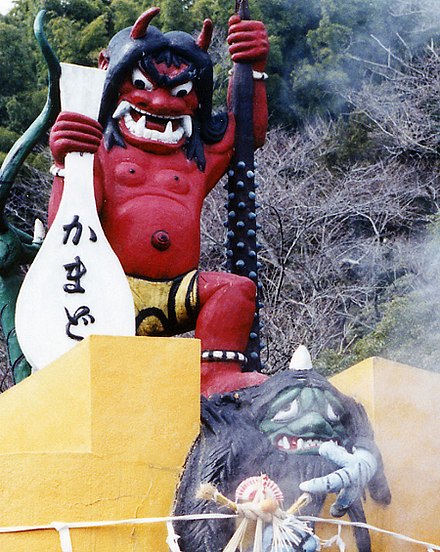
 An oni (おに) (/ni/ OH-nee) is a kind of yōkai, demon, orc, ogre, or troll in Japanese folklore. They are believed to live in caves or deep in the mountains.


This oni (ogre) tramples a hapless villain in Beppu, Oita, Oita Prefecture, a famous onsen hot springs resort on the island of Kyushu in Japan.

👹

Thursday, December 7, 2023

Thursday, November 30, 2023

Tuesday, November 28, 2023

Adsorption

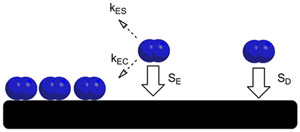
 Adsorption is the adhesion of atoms, ions or molecules from a gas, liquid or dissolved solid to a surface.


 Two adsorbate nitrogen molecules adsorbing onto a tungsten adsorbent from the precursor state around an island of previously adsorbed adsorbate (left) and via random adsorption (right)

Sunday, November 26, 2023

frenulum

 A frenulum /ˈfrɛnjʊləm/ or frenum /ˈfrnəm/ (pl.: frenula or frena, from the Latin frēnulum, "little bridle", the diminutive of frēnum) is a small fold of tissue that secures the motion of a mobile organ in the body


Wednesday, November 22, 2023

molly wop


molly wop (third-person singular simple present molly wops, present participle molly wopping, simple past and past participle molly wopped)

  1. (slang, transitive) To hit (someone) hard.

Tuesday, November 21, 2023

Monday, November 20, 2023

rand


The South African rand, or simply the rand, (sign: R; code: ZAR) is the official currency of the Southern African Common Monetary Area: South Africa, Namibia (alongside the Namibian dollar), Lesotho (alongside the Lesotho loti) and Eswatini (alongside the Swazi lilangeni). It is subdivided into 100 cents (sign: "c") and the rand and cents are separated by a comma.

The South African rand is legal tender in the Common Monetary Area member states of Namibia, Lesotho and Eswatini, with these three countries also having their own national currency (the dollar, the loti and the lilangeni respectively) pegged with the rand at parity and still widely accepted as substitutes. The rand was also legal tender in Botswana until 1976, when the pula replaced the rand at par. 


 The rand takes its name from the Witwatersrand ("white waters' ridge" in English, rand being the Afrikaans word for 'ridge'), the ridge upon which Johannesburg is built and where most of South Africa's gold deposits were found. In English and Afrikaans the singular and plural form of the unit ("rand") is the same: one rand, ten rand, two million rand.

synanthrope

 A synanthrope (from ancient Greek σύν sýn "together, with" and ἄνθρωπος ánthrōpos "man") is an organism that evolve...